

10 Things You Don't Know About Whales
Whales are intelligent, social, and mysterious. Despite all we’ve learned, much of their world remains beyond our reach. Here are 10 things you don’t know about whales.

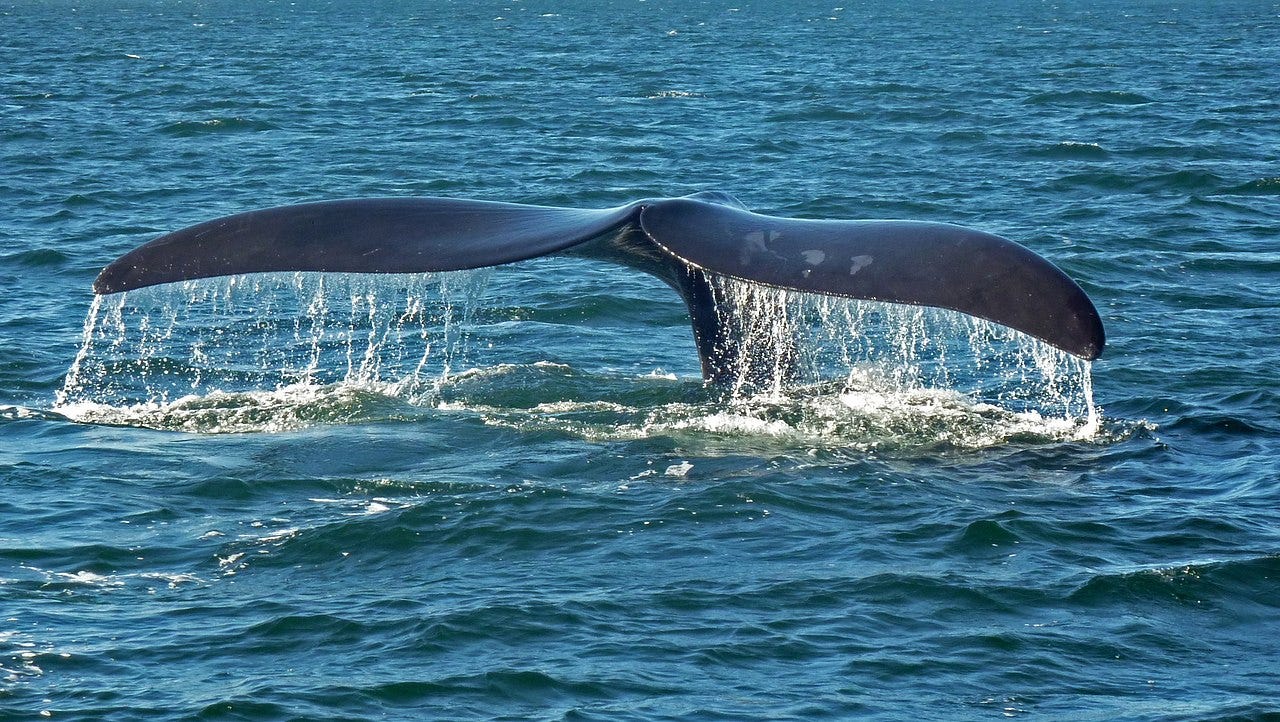
Despite centuries of fascination, whales remain among the least understood creatures on Earth. We’ve studied their migrations, recorded their songs, and tracked their recoveries from near extinction, yet much of their world still eludes us. Beneath the surface of the ocean, whales live in an environment largely inaccessible to human observation. What we know is often inferred from sound waves, satellite signals, and the occasional breach of the surface — small clues to an existence shaped by immense scale and extraordinary adaptation.
Their intelligence rivals that of any species on the planet. Whales exhibit complex social structures, cooperative behaviors, and emotional depth once thought to be uniquely human. They share culture across generations, communicate in regional dialects, and even mourn their dead. Neuroscientists have found spindle neurons — the same specialized brain cells linked to emotion and empathy in humans — in whales, suggesting that their inner lives may be as nuanced as our own.
The deeper we look, the clearer it becomes that whales are not simply relics of natural history, but sentient participants in the planet’s living system. They shape the ocean’s ecology, influence climate patterns, and may hold keys to understanding consciousness itself. Their world remains largely hidden, but what’s known continues to surprise. Here are 10 things you don’t know about whales.
10. The “52-Hertz” Whale May Be the Loneliest Animal on Earth
Among the strangest discoveries of modern marine science is a whale detected singing at 52 hertz — far higher than any known species. First identified by U.S. Navy hydrophones in the 1980s, this mysterious creature roams the Pacific each year, calling out at a frequency no other whale seems to answer. Scientists have never seen it, only tracked its acoustic signature. Its identity remains unknown: it could be a malformed blue whale, a hybrid species, or a one-of-a-kind survivor. The “52-Hertz Whale” has since become a metaphor for human isolation — a solitary voice echoing through an ocean of indifference.
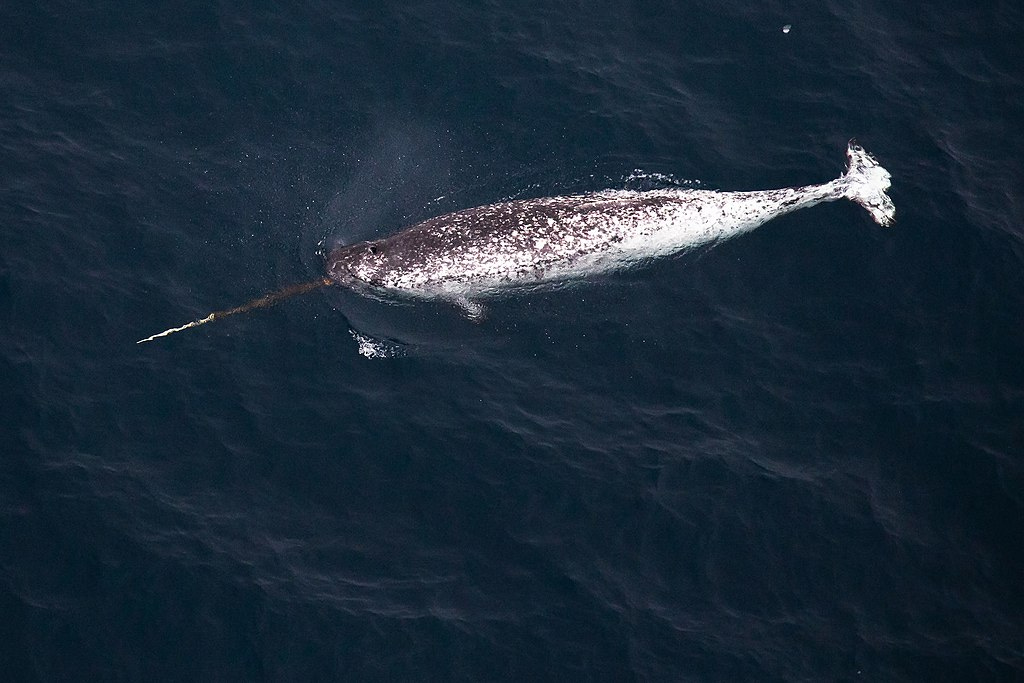
9. Narwhal Tusks Are Sensory Tools, Not Weapons
The narwhal’s signature tusk — often called the “unicorn horn of the sea” — is not for fighting, despite appearances. It’s actually an elongated canine tooth that can reach nine feet in length and contains around ten million nerve endings. Researchers believe it functions as a sensory organ that detects subtle shifts in temperature, pressure, and salinity. In other words, narwhals can taste the water with their tusks. Males may use them in social rituals or to display dominance, but their real evolutionary advantage likely lies in environmental perception rather than combat.
8. Whale Earwax Is an Oceanic Archive
Inside a whale’s ear canal forms a waxy plug that accumulates over its lifetime — much like the rings of a tree. Each alternating light-and-dark layer represents six months of growth. When scientists extract these plugs, they can reconstruct a whale’s life history, including its exposure to pollutants, stress hormones, and dietary changes. From this wax, researchers have mapped the rise of oceanic mercury levels, the lingering effects of DDT, and even the hormonal impact of ship noise. A single earplug can contain fifty years of chemical data, making whales living recorders of human activity.
7. Their Deaths Sustain Life for Centuries
When a whale dies, its body eventually sinks to the seafloor, creating what’s known as a whale fall. This massive carcass becomes the foundation for a new ecosystem. Scavengers like hagfish and sleeper sharks feed first, followed by bone-eating worms (Osedax) that burrow into the skeleton to extract nutrients. Over decades, bacteria and invertebrates colonize the bones, transforming the site into a deep-sea reef that can support more than 200 species. Whale falls are rare but vital, serving as islands of biodiversity in the ocean’s most desolate regions.
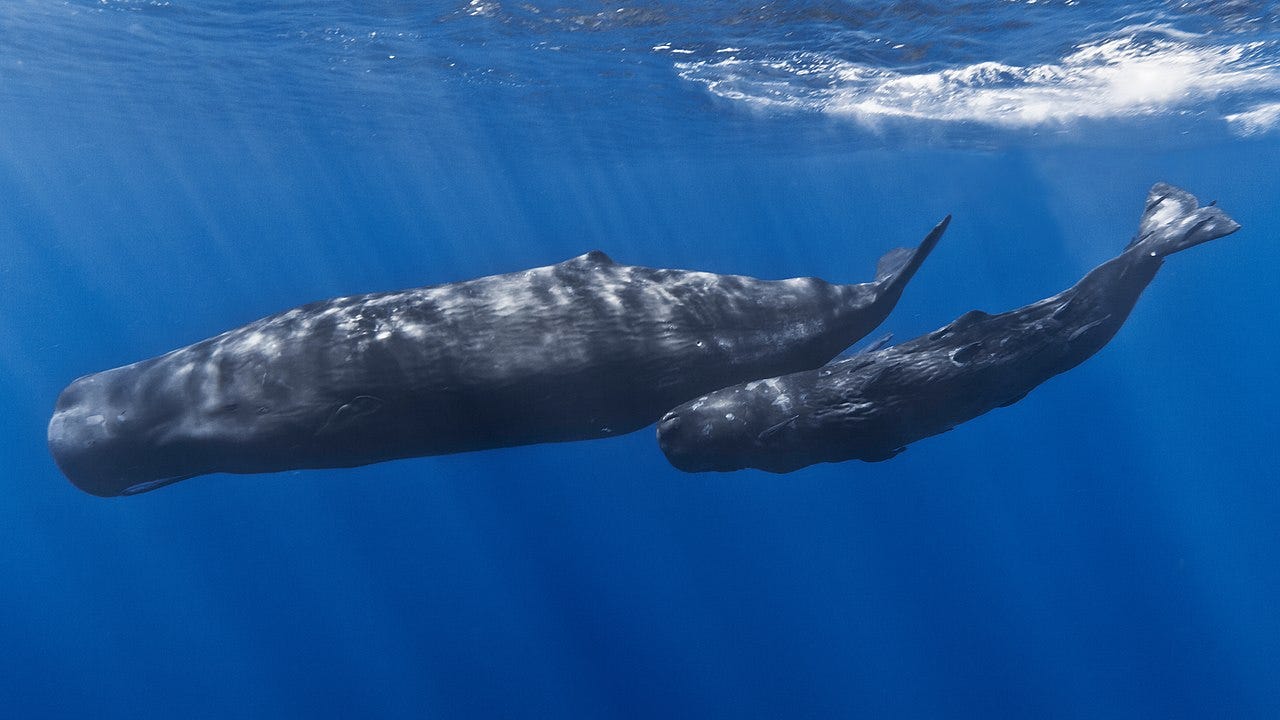
6. Sperm Whales Speak in Dialects
Sperm whales communicate using patterned clicks known as “codas.” These clicks vary across pods and regions, forming distinct dialects—a sign of complex culture within the species. Caribbean sperm whales, for instance, use shorter, faster sequences than their Pacific relatives. These dialects are passed from mothers to calves and reinforced socially within clans, suggesting cultural evolution similar to that seen in primates. Each group’s vocal signature can identify not only geography but also social belonging — a reminder that communication in the deep sea is as intricate as any human language.
5. Whales Help Regulate Earth’s Climate
Beyond their majesty, whales play an invisible role in stabilizing the planet’s climate. Their iron- and nitrogen-rich waste fertilizes phytoplankton, which absorb enormous quantities of carbon dioxide. When whales die, their bodies sequester that carbon by sinking to the ocean floor — a process scientists call the “whale carbon pump.” Some studies estimate that restoring pre-whaling whale populations could capture millions of tons of CO₂ annually. Far from passive giants, whales are active engineers of Earth’s biosphere, connecting the health of the oceans to the air we breathe.
4. They Navigate by Magnetic Maps
Certain whale species appear to possess a biological compass. Inside their tissues are microscopic crystals of magnetite — the same mineral that gives birds and turtles their navigational abilities. This allows whales to orient themselves to Earth’s geomagnetic field, guiding their seasonal migrations that can span thousands of miles. When solar storms or magnetic field shifts occur, strandings often increase, suggesting that disorientation can be fatal. The ocean’s largest travelers are, in essence, reading the planet’s invisible lines of force.
3. Sperm Whales Make the Loudest Sound on Earth
At the top of the list is a feat of physics: the sperm whale’s echolocation clicks can exceed 230 decibels — louder than a jet engine, gunfire, or a Saturn V rocket launch. These concentrated sound pulses are used to hunt squid in the pitch-black depths of the ocean, but they also serve as a form of communication. Some researchers speculate the blasts may even stun prey, though this remains unproven. The force of these clicks underscores how evolution equipped whales to dominate a world defined not by light, but by sound.
2. They Sunbathe — and Get Sunburned
Blue and fin whales often linger at the surface for long periods, absorbing sunlight while feeding or resting. Scientists studying their skin discovered signs of UV damage nearly identical to human sunburn. In response, whales produce melanin — the same pigment that darkens human skin — and its levels fluctuate seasonally. The phenomenon suggests an evolutionary adaptation to shifting climates and ozone depletion. It’s a humbling reminder that even the largest creatures on Earth aren’t immune to the planet’s changing environment.
1. Star Trek Helped Save the Whales
In the 1986 film Star Trek IV: The Voyage Home, the crew of the starship Enterprise travels back in time to rescue humpback whales, whose extinction in the future threatens life on Earth. The film wasn’t just science fiction — it had a measurable cultural impact. Released during the height of the anti-whaling movement, the movie brought public attention to the plight of whale populations decimated by industrial whaling. Donations to conservation groups spiked after the film’s release, and the public support it generated helped reinforce international bans on commercial whaling. The movie’s message — that the survival of whales is inseparable from humanity’s own fate — remains a rare instance where Hollywood directly influenced global environmental policy.
“The 10” is just a fun and lighthearted diversion from the usual analysis and commentary on More Signal, Less Noise. What topics would you like me to explore in The 10? Let me know in the comments.
Nice article. Ten things you don’t know about space is a suggestion.