

Corruption, Legality Claims Hound Trump’s New $1.8 Billion Compensation Fund
Critics warn Trump’s proposed Anti-Weaponization Fund rests on dubious legal grounds and could become a taxpayer-backed reward system for political allies and Jan. 6 rioters.

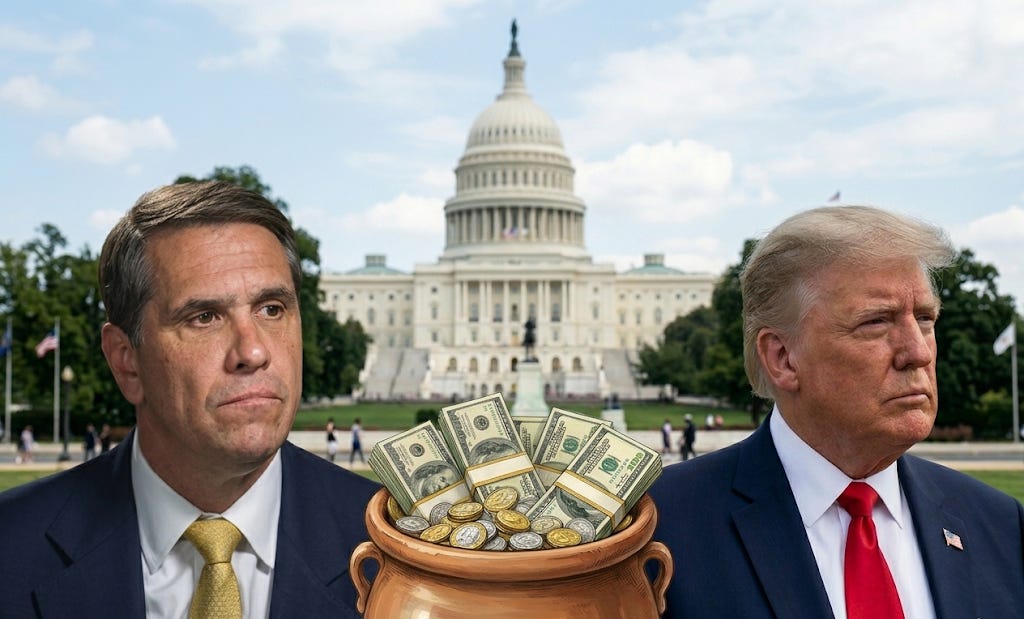
The so-called “Anti-Weaponization Fund” created through the settlement of the lawsuit between President Donald Trump and his family may go down as the turning point in Trump’s presidency and legacy, as critics and legal experts are calling the entire affair the most blatant act of corruption in U.S. history.
The $1.776 billion fund is intended to compensate victims of alleged malicious federal government investigations and prosecutions, such as those Trump says targeted him during his years out of the White House. The fund was created through a settlement tied to the breach of Trump’s tax records, which exposed his personal and business finances.
As details emerge, people across the political spectrum are growing increasingly uneasy about giving the president what amounts to a slush fund to distribute to anyone claiming they were wronged because the government investigated them or prosecuted them for crimes they insist they did not commit. Potential recipients include Jan. 6 rioters pardoned by Trump.
Trump and Acting Attorney General Todd Blanche defend the fund, arguing that anyone harmed by what they describe as an overzealous Justice Department under Presidents Barack Obama and Joe Biden – Democrats and Republicans alike – deserves compensation for their suffering and expenses.
The first signs of the fund’s creation did not go over well in Washington or across the country. Democrats quickly denounced it as an effort by the president to reward allies and supporters with taxpayer money. The Treasury Department’s chief counsel, who would have overseen the fund’s establishment, resigned immediately after the announcement. Even Republicans are reportedly expressing concern, albeit quietly and behind closed doors.
The fund presents problems on multiple levels.
First is the source of its creation. Trump, his business, and his family sued the IRS over a 2022 breach of their tax records by a third-party contractor, Charles Littlejohn, who leaked the information to the media. Littlejohn was tried and convicted over the incident.
Trump waited until he was back in the White House to sue, long after the statutory deadline for filing a claim had passed. His personal lawyers were effectively arguing against Justice Department attorneys representing the IRS – both agencies ultimately under the president’s authority. The presiding judge reportedly expressed significant reservations about the case because a bedrock legal principle holds that a person cannot sue himself, which is effectively what Trump was doing.
IRS lawyers reportedly reviewed the case through the agency’s customary process and identified several major issues with the claim. It fell outside the statutory deadline. The breach was carried out by a third-party contractor operating largely outside IRS control. And there was no demonstrable harm to the president or his family business.
The case was supposed to return to court yesterday, as the judge sought evidence that the claims had valid legal justification. IRS lawyers were reportedly preparing to argue against the settlement. Yet the settlement eliminated the need for the hearing, which could have derailed the agreement. It also spared Trump’s Justice Department from having to defend the settlement publicly in court.
Then there is another provision of the settlement: ending audits and prohibiting future reviews of the president’s and his family’s taxes. Trump has long claimed IRS audits were the reason he refused to release his tax returns publicly. Under this agreement, not only would open audits end, but Trump would also no longer face IRS scrutiny over current or past tax issues. Experts speculate the provision could potentially save the president $100 million.
New reporting from The New York Times suggests the fund may also violate longstanding Justice Department policies, including positions enacted during the Trump administration last year.
Blanche argues the fund conforms with previous government relief programs established through legal settlements. Legal experts counter that, in comparable cases, compensation payouts are typically limited to parties directly involved in lawsuits whose claims are clearly defined and justified.
Conversely, the Anti-Weaponization Fund would be administered by a five-member board appointed by Trump that would review claims from anyone alleging harm by the government. The administration reportedly has no clear understanding of how many people may qualify or what appropriate payouts would be. Vice President JD Vance has even suggested Hunter Biden – the former president’s son, who was prosecuted on firearms charges and investigated for financial misconduct – could potentially file a claim.
Last year, former Attorney General Pam Bondi signed a policy titled “Reinstating the Prohibitions on Improper Third-Party Settlements,” which restricts settlements involving nongovernmental third parties that were neither victims nor parties to a lawsuit except under limited circumstances. That policy would appear to prohibit payments to individuals who have not already brought legal claims against the government.
What the Trump administration wants the public to believe is that both individuals convicted – and later pardoned – for their actions on Jan. 6 and members of the Capitol Police assaulted and injured that day could receive compensation from the same government fund.
The entire fund stinks to high heaven. The Republican-controlled Congress has done little to curb Trump’s excesses – from tearing down the East Wing to imposing what critics describe as illegal or improperly administered tariffs to launching the ongoing war in Iran. Even as Republicans face increasing public dissatisfaction over Trump’s policies and handling of the economy, they have been slow to act against a president who maintains an iron grip on the party.
Two people not waiting for Congress to rein in the Trump administration are Harry Dunn, a retired Capitol Police officer, and Daniel Hodges, a D.C. police officer, both injured on Jan. 6. They have filed a lawsuit against the Trump administration, arguing the fund would reward and enrich the very people who assaulted them and their fellow officers.
For his part, Trump says he will not benefit from the fund, which critics say is plainly untrue. They argue the Trump-controlled board overseeing the program can – and likely will – use the fund to reward and enrich the president’s allies. Under legal standards, that constitutes a direct benefit.
The open question is where this ends. If the fund moves forward, what happens when 1,500 Jan. 6 rioters seek settlements? If each rioter received a $1.1 million payout, the fund would be exhausted. And because the government has expressed a willingness – if not an obligation – to compensate so-called victims, the administrators would likely seek additional funding to keep the program alive. It risks becoming a perpetual grift at taxpayer expense.
No one has established what constitutes appropriate compensation. Some may balk at the idea of $1.1 million payouts for Jan. 6 rioters. Yet Trump – who demonstrated no measurable harm from the IRS data breach – sought $10 billion. What happens if billionaire Ken Griffin, who also sued the IRS over the same breach and received nothing more than an apology, returns seeking compensation comparable to the president’s?
Trump and his administration pledged to be the most transparent in history. The public did not expect that transparency would extend to corruption in plain sight, without accountability to Congress.