

The Petty Persecution of Chris Krebs
The former head of the Cybersecurity and Infrastructure Security Agency spoke the truth about the 2020 election — now he's being pursued for punished by the vindictive Trump administration.

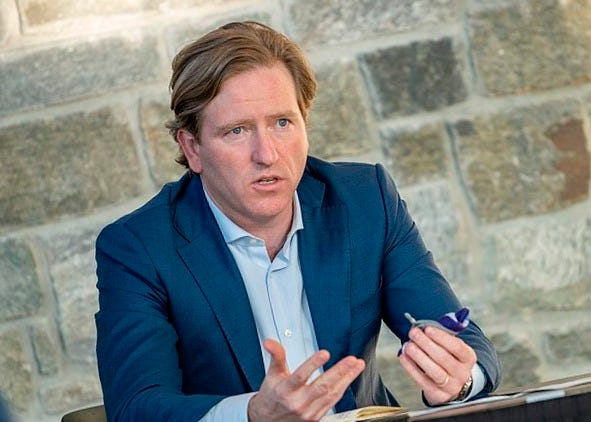
For most Americans, the name Chris Krebs doesn’t come easily to mind. That’s why the news media often reminds audiences that he was the top cybersecurity official during the first Trump administration — and the person who declared the 2020 presidential election the most secure in American history.
Krebs, the former head of the Cybersecurity and Infrastructure Security Agency, is a name everyone should know now, not for his résumé in government or cybersecurity but because President Donald Trump targeted him for the unpardonable act of speaking the truth and maintaining his integrity.
“He came out right after the election, which was a rigged election, a badly rigged election…this guy Krebs was saying, ‘Oh, the election was great, it was great,’” Trump said during a ceremony to sign the executive order that launched the Krebs investigation.
Yesterday, the Department of Homeland Security revoked Krebs’ Global Entry authorization. Global Entry is an expedited service that allows American travelers to bypass standard passport control upon returning from international travel. Anyone who’s flown long distances knows the frustration of waiting in those endless customs lines.
Global Entry is a convenience that makes you wonder why everyone doesn’t have it. After all, the government already knows where you traveled, how long you were gone, and — thanks to credit card transactions — likely what you bought. Traditional passport checks feel increasingly antiquated, but that’s a topic for another time.
In 2020, while Trump was claiming the election was stolen and voting machines had been manipulated to favor Joe Biden, Krebs was one of the few senior officials who publicly rebuked those allegations. In official reports and media appearances, he repeatedly stated there was no cybersecurity evidence of election tampering.
Let’s clarify what a “cybersecurity perspective” means. Could foreign actors have influenced public opinion through social media? Yes. Could ineligible individuals have voted? Possibly — but not at a scale that would have altered the outcome. Could poll workers have stuffed ballot boxes with counterfeit votes printed on bamboo and flown in from China? Technically imaginable — but only in the realm of a George Clooney casino heist.
From a cybersecurity standpoint, there was no evidence that hackers or foreign intelligence services breached voting systems or changed election results.
In the broader context of the 2020 election, the statements by Krebs, reportedly a Republican, weren’t unique. Then-Attorney General Bill Barr also acknowledged there was no evidence of widespread fraud. Dozens of lawsuits brought by Trump’s campaign were thrown out by courts — including those presided over by judges he appointed. Still, the retribution continues.
The latest chapter began a few weeks ago, when Trump reportedly ordered the Department of Justice to investigate Krebs. Both he and his employer, cybersecurity firm SentinelOne, had their security clearances revoked, effectively barring them from working on sensitive government projects and potentially costing the company and its partners millions in business.
This is part of a broader pattern. The Trump apparatus has a playbook: pressure law firms, intimidate academic institutions, and now revoke the credentials of those who pose a political inconvenience. The aim isn’t to seek justice — it’s to obstruct, to exhaust, and to punish. Economic opportunities are cut off. Resources are drained. Lives are destabilized. The power of the state is turned inward, weaponized against individuals.
Krebs hasn’t committed a crime. He did his job with integrity. Yet, because of the open DOJ investigation, his Global Entry status was revoked. He would eventually be cleared under normal circumstances — and these are anything but. But the intent isn’t resolution. It’s deterrence through pain.
Reportedly, Krebs resigned from SentinelOne to focus on his defense and protect the company. No one should be forced into that position. He may have the means to withstand the pressure — but most Americans would not.
“With all the problems we have in the world right now, with all the threats we’re facing, this is extremely counterproductive,” Krebs said in an interview with The Wall Street Journal.
Yes, government agencies make mistakes. People are wrongly deported. Raids are conducted on the wrong homes. Due process is sometimes skirted in the name of expediency. But using federal authority to investigate and economically incapacitate citizens without cause, simply because they told the truth, is something else entirely. It is not just persecution. It is institutionalized retaliation.
And it is not isolated.
What’s happening to Krebs should alarm every American. The selective weaponization of federal power against private citizens signals something darker — a normalization of fear as a political tool. It’s an attempt to chill dissent, suppress truth, and rewrite the bounds of acceptable discourse in public life.
This isn’t about Krebs. It’s about whether we are willing to accept a future in which no one is safe from reprisal for simply doing what is right.